Beyond Words: How Nonverbal Communication Shapes Mediation Outcomes
In every mediation, words matter. But often, it’s the unspoken signals—the gestures, posture, tone, and expressions—that provide the deepest insights into a participant’s emotions, intentions, and resistance. Understanding body language isn’t just useful—it’s essential for mediators who wish to facilitate genuine dialogue and trust.
Why Nonverbal Communication Is Crucial in Mediation
In emotionally charged situations, people may struggle to articulate their needs clearly. Nonverbal cues fill these gaps. A sigh may signal frustration even when someone says “I’m fine.” Avoiding eye contact may betray discomfort, and a firm handshake or upright posture may project confidence or defiance. Mediators who pay attention to these elements can detect issues that might otherwise remain hidden beneath the surface.
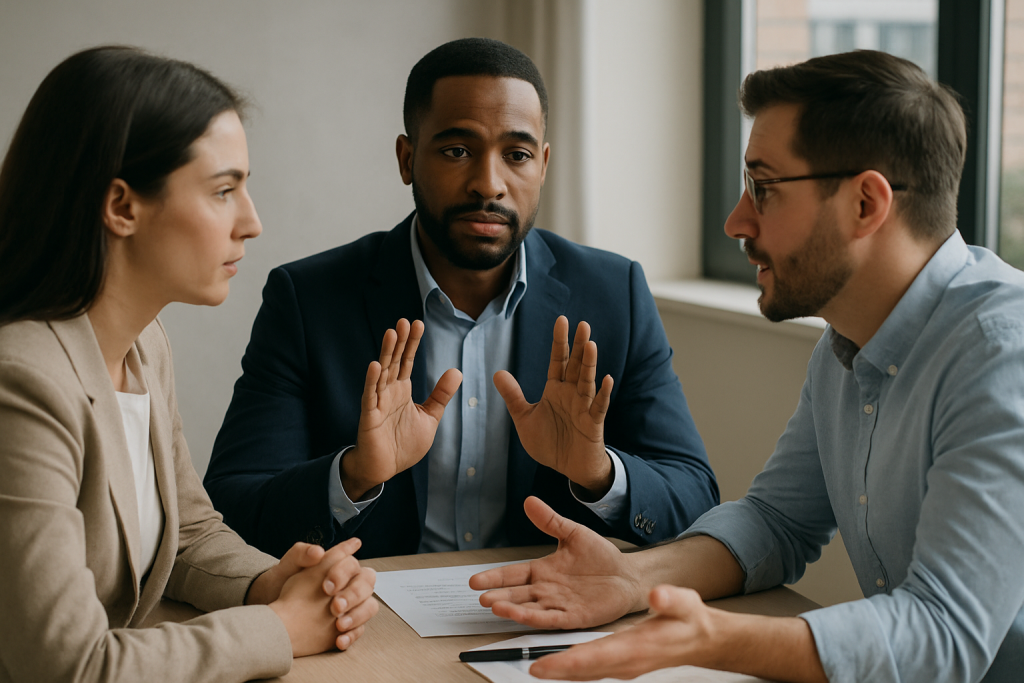
Practical Examples in the Mediation Room
Imagine a party insists on their willingness to negotiate, yet leans away, arms tightly crossed. The body contradicts the voice. Alternatively, a participant nods subtly while their counterpart speaks—indicating growing agreement, even if words haven’t caught up yet. When emotions are strong, posture and tone may reveal rising tension before anyone verbalizes a problem. These signs help the mediator know when to pause, reframe, or encourage clarification.
The Mediator’s Role: Reading and Modulating Nonverbal Cues
A skilled mediator does more than observe—they also project openness through their own body language. A calm voice, relaxed shoulders, and consistent eye contact can create a safe space. By mirroring a speaker’s rhythm or matching their tone, a mediator can build subtle rapport. Being physically present, at eye level, and open in posture sends a strong signal of neutrality and support.
Conclusion
Nonverbal communication often tells the real story. In mediation, success depends not only on hearing what’s said, but also on understanding what’s left unsaid. The ability to “listen with your eyes” enables mediators to connect more deeply with participants, resolve hidden tensions, and guide the process with clarity and empathy.